Fall River, Massachusetts
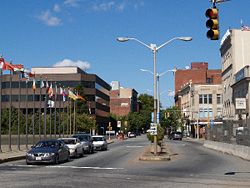 Fall River is a city in Bristol County, Massachusetts, in the United States. It is located about 46 miles (74 km) south of Boston, 16 miles (26 km) southeast of Providence, Rhode Island and 12 miles (19 km) west of New Bedford. The city's population was 91,938 during the 2000 census, making it the eighth largest city in the state. The current mayor of the city is Bob Correia.
Located along the eastern shore of Mount Hope Bay at the mouth of the Taunton River, the City became famous during the 19th century as the leading textile manufacturing center in the United States. While the texile industry has long since moved on (first to the South, and now overseas), its impact on the City's culture and landscape remains to this day.
Fall River's motto is "We'll Try." It is nicknamed "The Scholarship City", which is seen on the welcome signs upon entering the city. Fall River is well-known for Lizzie Borden, who was accused, and later acquitted of the 1892 double axe-murder that occurred at her home on Second Street in the city. Fall River is also known for Battleship Cove, the world's largest collection of World War II naval vessels.
At the time of the establishment of the Plymouth Colony in 1620, the area what would one day become the City of Fall River was inhabited by the Pokanoket Wampanoag tribe, headquartered at Mount Hope in what is now Bristol, Rhode Island. The "falling" river that the name Fall River refers to is the Quequechan River (pronounced "Quick-a-shan" by locals) which flows through the city, dropping steeply into the bay. Quequechan is a Wampanoag word believed to mean "Falling River" or "Leaping/Falling Waters."
In 1653, Freetown was settled at Assonet Bay by members of the Plymouth Colony, as part of Freeman's Purchase, which included the northern part of what is now Fall River. In 1683 Freetown was incorporated as a town within the colony. The southern part of what is now Fall River was incorporated as the town of Tiverton as part of the Massachusetts Bay Colony in 1694, a few years after the merger with Plymouth Colony. In 1746, in the settlement of a colonial boundary dispute between Rhode Island and Massachusetts, Tiverton was annexed to Rhode Island, along with Little Compton and what is now Bristol County, Rhode Island. The boundary was then placed approximately at what is now Columbia Street.
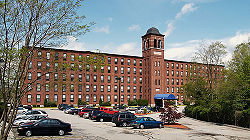 In 1703, Benjamin Church, a hero of King Phillip's War established a saw mill, grist mill and a fulling mill on the Quequechan River. In 1714, Church sold his land, along with the water rights to Richard Borden of Tiverton and his brother Joseph. This transaction would prove to be extremely valuable 100 years later, helping to establish the Borden family as the leaders in the development of Fall River's textile industry.
During the 18th century the area consisted mostly of small farms and relatively few inhabitants. In 1778, the Battle of Freetown, was fought here during the American Revolutionary War, the townspeople put up a strong defense against a British force.
In 1803, when Fall River was separated from Freetown and officially incorporated as its own town. A year later, Fall River changed its name to "Troy." The name "Troy" was used for 30 years and was officially changed back to Fall River on February 12, 1834.
In July 1843, the first great fire in Fall River's history destroyed much of the town center.
During this time, the southern part of what is now Fall River (south of Columbia Street) would remain part of Tiverton, Rhode Island. In 1856, the town of Tiverton, Rhode Island voted to split off its industrial northern section as Fall River, Rhode Island. In 1861, after decades of dispute, the United States Supreme Court moved the state boundary to what is now State Avenue, thereby creating a City of Fall River entirely within Massachsuetts. (Also as part of this decision, Pawtucket, Massachusetts would become part of Pawtucket, Rhode Island.